

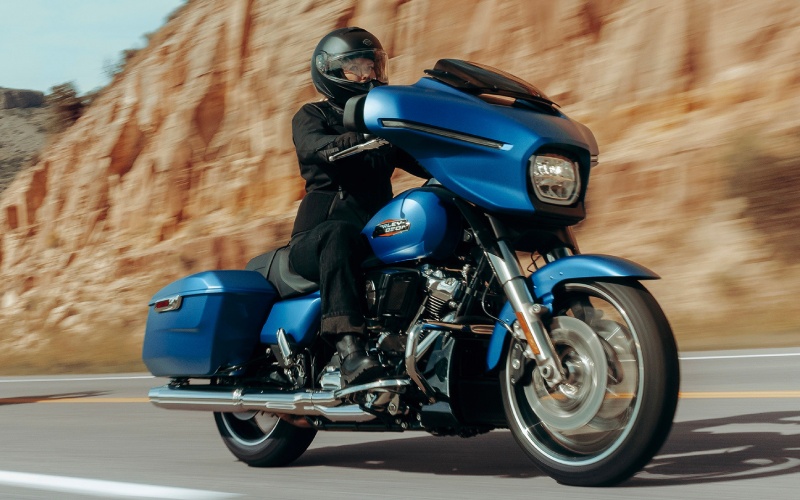
Lancaster Harley-Davidson® - Which bagger is more comfortable for long-distance rides around Lancaster, PA — the 2026 Harley-Davidson® Street Glide® or the 2026 Indian Challenger?
Choosing between two standout American baggers often comes down to a single question: which motorcycle keeps you fresher, longer, on the routes you ride most? Around Lancaster, PA, long-distance comfort means stable highway manners, low fatigue over rolling two-lanes, easy visibility of navigation prompts, and a cockpit that keeps wind and noise in check. In that context, the 2026 Harley-Davidson® Street Glide® and the 2026 Indian Challenger both bring serious credentials, but they go about comfort in different ways: the Street Glide with a refined Batwing fork-mounted fairing, a plush one-piece seat, and a larger, easier-to-glance 12.3-inch Skyline™ OS display; the Challenger with a frame-mounted fairing, a more aggressively tuned front end, and Ride Command on a 7-inch screen.
Comfort is a system, not a single part. For many riders, the Street Glide’s reprofiled Batwing fairing hits an ideal balance: it smooths airflow to reduce helmet lift and shoulder pressure, yet maintains agile steering response at low and mid speeds. That’s a big deal when your weekend includes short urban stretches linked by farmland sweepers, then a late-afternoon run on US routes. The 12.3-inch display is another unsung comfort booster—directions and audio controls are simply easier to read at a glance, cutting cognitive load. The Challenger’s frame-mounted fairing favors high-speed stability and pairs well with its inverted fork; if your comfort baseline leans toward a firmer front and locked-in interstate composure, it delivers. But if you want a calmer cockpit across a wider range of speeds and surfaces, the Street Glide’s fairing and screen combo are hard to beat.
Seat, Ergonomics, and Everyday Fit
Long-distance comfort starts at the contact points. The Street Glide’s one-piece seat and relaxed floorboard-to-bar triangle feel natural for a spectrum of rider sizes, limiting pressure hot spots during multi-hour rides. Several riders report that the Harley-Davidson® saddle supports the hips without forcing a rigid spine angle, which helps when you combine highway stints with slower, stop-and-go segments across small-town grids. The Challenger’s seat is also well-shaped, with generous real estate and supportive foam density. Both motorcycles offer accessory options to tune rider reach and posture, but many touring riders find the Street Glide’s out-of-the-crate fit to be easier on the lower back over varied terrain and pacing.
Wind management is equally important. With its updated contours, the Street Glide’s Batwing fairing reduces buffeting while maintaining that classic view over the gauges. The Challenger employs a fairing that is steady at speed and often pairs with an adjustable windshield on select trims—useful for fine-tuning airflow. Still, in many mixed-pace scenarios, the Street Glide cockpit tends to stay quieter and calmer, which translates to lower fatigue and better focus several hours into a ride.
Suspension Character and Road Feel
Suspension that filters rough edges without isolating you from feedback is a comfort essential. The Street Glide uses a 49mm dual-bending-valve fork and dual outboard emulsion shocks with easy preload adjustability. The tuning errs on the side of plush control, so it tracks cleanly over seam patches and patched tar snakes that appear on rural connectors. The Challenger counters with an inverted fork and a Fox rear shock that feel purposeful and athletic. It’s terrific when the pavement is clean and fast; the Street Glide, however, often feels less jarring on mixed surfaces and through construction zones—comfort you feel by the time you step off for a fuel stop.
Display Size, Audio Clarity, and Cognitive Load
Long days amplify small advantages. The Street Glide’s 12.3-inch Skyline™ OS display is a major comfort asset, making directions, rider modes, music, and bike data genuinely glanceable. When you only need a second to confirm your next turn, you spend more time with eyes up, which is the very definition of relaxed. Audio is straightforward too—50 watts per channel to a pair of fairing speakers keeps podcasts and prompts audible without forcing maximum volume. The Challenger’s 7-inch unit is fully capable, supports Apple CarPlay, and ties into its audio well, with higher total output in base form. The difference is in daylight readability and map detail at distance; the Street Glide’s larger canvas reduces squinting and menu-diving, which matters three hours into a ride.
Weight, Balance, and Low-Speed Ease
Comfort extends to parking lots and town centers. The Street Glide’s lower running weight can be a day-saver after several hours on the road, particularly when maneuvering into angled spots or easing around an unexpected detour. The Challenger is stable once rolling but carries more mass. For riders who prize calm behavior at walking pace and predictable balance through every throttle input, the Street Glide feels less demanding from breakfast stop to sunset return.
Safety Systems and Confidence
Comfort and confidence rise together. The Street Glide’s Cornering Enhanced ABS, Traction Control, Electronic Linked Braking, Drag-Torque Slip Control, Vehicle Hold Control, and TPMS are designed to step in unobtrusively when you need them and stay out of the way when you don’t. The Challenger’s Smart Lean suite offers lean-sensitive ABS and traction control, and on select trims you can add Blind Spot and Rear Collision Warning—useful situational tools. Pick your priority: minimalist, highly polished interventions that feel almost invisible (Street Glide), or robust alerts layered on top of lean-sensitive control (Challenger). Either way, knowing the systems are there helps you relax and settle into your pace.
Quick Takeaways
- Wind and noise management: The Street Glide’s reworked Batwing fairing and calm cockpit reduce buffeting and listening fatigue at varied speeds.
- Display and navigation comfort: The 12.3-inch Skyline™ OS screen is easier to read at a glance, lowering mental load over hours on the road.
- Low-speed ease: Lighter running weight and friendly balance make fuel stops, tight turns, and angled parking less tiring.
- Sport-leaning stability: The Challenger’s frame-mounted fairing and inverted fork favor firm, high-speed composure for riders who want a planted interstate feel.
So which is more comfortable for distance? If your rides cover mixed speeds, changing surfaces, and a steady drip of small decisions—turns, lane changes, town centers—the Street Glide’s calm airflow, easier-read display, and lighter feel often add up to a more relaxed day. If your comfort metric centers on long interstate slogs with a preference for a firmer front and locked-in highway line, the Challenger’s chassis personality has appeal. Most riders, though, spend their time on a blend of roads where the Street Glide’s strengths are most obvious.
When you want expert guidance tailored to your routes, Lancaster Harley-Davidson® is a trusted resource with deep product knowledge and local insights. Our team is committed to matching riders with setups that reduce fatigue and amplify the best parts of your ride—fairing, screen, seat, and suspension all working in concert to keep you comfortable hour after hour.
Frequently Asked Questions:
Is the larger 12.3-inch Skyline™ OS display on the Street Glide a real comfort advantage?
Yes. Bigger, brighter mapping and menus mean faster glances and fewer long looks. Over a full day, that lower cognitive load reduces fatigue more than you might expect.
How do the fairings affect comfort on backroads and highways?
The Street Glide’s Batwing fairing smooths airflow and keeps steering light, which is great for mixed-pace riding. The Challenger’s frame-mounted fairing is very stable at sustained highway speeds, leaning slightly more athletic in feel.
Which bike feels easier at low speeds after a long ride?
The Street Glide’s lower running weight makes slow maneuvers, angled parking, and tight turns feel less demanding late in the day.
Do both motorcycles support Apple CarPlay and modern audio?
Yes. Both integrate Apple CarPlay and deliver strong audio, with the Street Glide offering 50 watts per channel to the twin fairing speakers and the Challenger featuring robust base output with optional upgrades.
Where can I get local guidance for setup and accessories?
Look for a knowledgeable team serving Reading, Lancaster, and Harrisburg that understands your riding style and local roads, then dial in wind management, display angle, and seating to your preferences.