

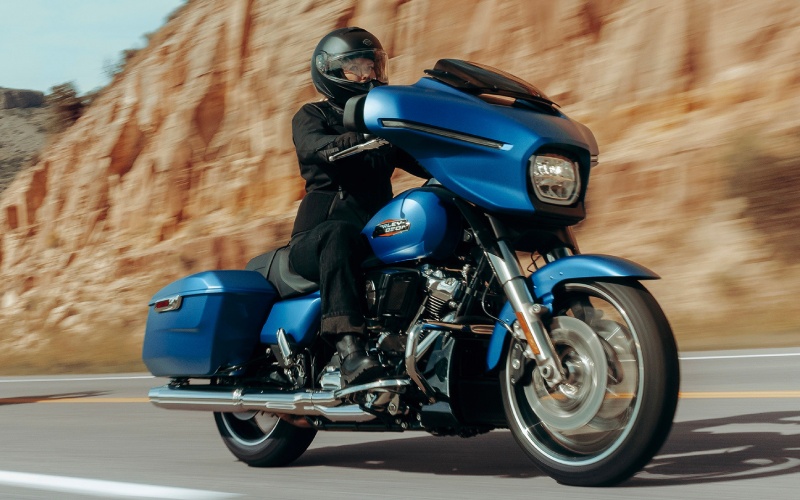
Lancaster Harley-Davidson® - Will Vehicle Hold Control on the 2026 Harley-Davidson® Street Glide® help with Reading, PA hills?
Hill starts can be the most stressful few seconds of any city ride — especially in Reading, PA — and that is exactly where the 2026 Harley-Davidson® Street Glide® shines. Backed by the Milwaukee-Eight® 117 and a suite of Rider Safety Enhancements, the Street Glide® is engineered to smooth out those uphill takeoffs on the Penn Street Bridge ramp, the Skyline Drive turnouts by the Pagoda, and the short, steep garage exits downtown. At Lancaster Harley-Davidson®, we’re often asked whether Vehicle Hold Control (VHC) on the 2026 Street Glide® truly makes a difference on our local hills. Here’s a clear, rider-focused look at how it works, where it helps, and what else you gain in day-to-day Reading riding.
Beyond its classic Batwing fairing and connected Skyline™ OS 12.3 in. TFT display, the Street Glide® brings thoughtful tech to real-world moments. If you’ve ever balanced the rear brake, clutch, and throttle while an SUV idles inches from your back tire, you already know why hill-control tech matters. VHC is designed for exactly those situations — and it integrates with other Harley-Davidson® Cornering Rider Safety Enhancements to keep the launch smooth and predictable.
Why hill starts matter around Reading, PA
Reading combines short, punchy grades with dense intersections and quick merges. Consider the US 422/222 cloverleaf, the approach to the Penn Street Bridge from the riverfront, Wyomissing’s stop-and-go near Berkshire Boulevard, or the scenic but sloped pull-offs along Skyline Drive above Mount Penn. These are authentic, everyday spots where the bike’s weight, brake feel, and rider confidence come together — and where a feature like Vehicle Hold Control pays off.
What Vehicle Hold Control (VHC) does on the Street Glide®
VHC is a rider aid that temporarily holds brake pressure after you stop, so the bike does not roll backward or forward before you’re ready to move. It is not a parking brake — it’s a short-duration assist that frees up your right foot and mind, so you can focus on a clean, confident launch. Here is how it typically operates in practice on the 2026 Street Glide®:
- Come to a complete stop: Apply the front brake, rear brake, or both to stop the motorcycle on an incline or decline.
- Press and release the brake: Give the brake lever or pedal a firm squeeze at the stop. The system holds pressure after you release.
- Confirm the hold: The bike indicates that VHC is active, so you know it’s maintaining brake force.
- Launch normally: As you roll on the throttle and release the clutch, VHC eases off so the Street Glide® pulls away smoothly.
That’s the core of it — quick, simple, and confidence-building. Where you’ll notice it most is when traffic stacks up on a steep grade or when you pause to check cross-traffic on a short hill before merging.
Local scenarios where VHC helps
Reading’s mix of downtown ramps, neighborhood rises, and scenic overlooks makes hill-holding support more than a comfort feature — it’s a useful tool. Here are a few spots where riders tell us they appreciate it most:
- Penn Street Bridge ramp: Keeps your Street Glide® steady while you wait for a safe gap to merge across lanes.
- Pagoda turnouts on Skyline Drive: Stabilizes the bike if you pause on uneven, sloped pull-offs to take in the view.
- West Shore Bypass exits: Gives you a calm setup for quick right-on-red scenarios from an uphill stop.
- Downtown Reading garages: Controls creeping on short, steep exit ramps so you can focus forward.
- Blue Marsh Lake overlooks: Helps manage slight gravel or dusty shoulders that combine slope with looser traction.
In each case, VHC simply buys you a smoother first second — and on a Grand American Touring motorcycle that’s designed for relaxed control, that moment matters.
Complementary systems that support hill starts
VHC is only one part of the 2026 Street Glide® tool kit. Harley-Davidson® Rider Safety Enhancements surrounds those launches with traction and braking intelligence. Cornering Enhanced Anti-lock Brake System (C-ABS) moderates brake pressure at lean, Cornering Enhanced Electronic Linked Braking (C-ELB) helps proportion front and rear braking in a turn, and the Cornering Enhanced Traction Control System (C-TCS) helps manage rear-wheel spin on slick surfaces. For abrupt downshifts or throttle roll-offs on wet or dusty pavement, Cornering Drag-Torque Slip Control System (C-DSCS) helps reduce rear-wheel slip. Tire Pressure Monitoring System (TPMS) keeps you informed about inflation — a small detail that can meaningfully affect low-speed stability.
Underneath, the Street Glide® uses a 49 mm Dual Bending Valve front fork and 3 in. Dual Outboard Emulsion rear shocks with preload adjustability. That suspension communicates road surface changes while filtering harshness from bridge joints and patched downtown asphalt. The result is predictable weight transfer when you lift off the brakes and feed in throttle — exactly the moment where hill starts are won or lost.
Power delivery matters, too. The liquid-cooled Milwaukee-Eight® 117 is tuned for strong, usable torque — 130 ft-lbs at 3,250 rpm — so the bike steps forward decisively when you ease out the clutch. That clean low-rpm pull pairs naturally with VHC, making the Street Glide® feel poised rather than hurried when you move away from a stop on an incline.
Ergonomics and control for stop-and-go on grades
A low, confidence-inspiring 26.4 in. laden seat height helps more riders plant a boot at uneven city curbs or crowned lanes. The one-piece seat and wide bars give you leverage to keep the bike upright while you stage the launch. Add clear, legible digital gauges within the Skyline™ OS display and all-LED signature lighting, and you’re set up to read traffic, check your indicators, and pull away with minimal distraction.
When you’re stringing together Reading city streets and open stretches, Skyline™ OS supports a connected ride. The 12.3 in. full-color TFT gives you route guidance for unfamiliar side streets near the riverfront, integrates Apple CarPlay for media and calls, and places core bike info — including TPMS — front and center. It’s a modern interface that fits a touring motorcycle designed to reduce mental load when it counts.
If you want your Street Glide® tailored to your routine, our Parts and Service teams can help you dial in fit and control. From a preload tweak to match your typical two-up weight, to hand controls and footboards that better suit your height, the right setup compounds the benefits you feel from features like VHC during every uphill pause.
Frequently Asked Questions:
Does Vehicle Hold Control work when I’m riding two-up or carrying luggage?
Yes. VHC is designed to hold the motorcycle at a stop regardless of typical passenger or cargo weight within the bike’s rated limits. On steeper grades or with heavier loads, you may feel the hold more noticeably, but the goal is the same — keep the Street Glide® stationary until you begin your launch. Always apply smooth throttle and clutch to let the system release progressively.
Will VHC activate on slight hills, or does it need a steep grade?
VHC can engage on both mild and steep inclines or declines as long as you come to a stop and apply the required brake input to set the hold. You do not need an extreme slope for it to help. Many riders find it useful on short, moderate grades like the ramps feeding the Penn Street Bridge or garage exits downtown.
How do I know VHC is active on the 2026 Street Glide®?
The system provides an indicator so you can confirm the hold is set. That way, you know the bike will remain stationary while you get positioned to launch. As you roll on throttle and release the clutch, VHC phases out so you move off smoothly.
Is Vehicle Hold Control a parking brake?
No. VHC is not a substitute for a parking brake. It is a temporary assist designed to hold the bike at a stop for a short duration to support controlled launches on inclines or declines. If you need to park, follow normal parking procedures on safe, level surfaces and never rely on VHC to secure a parked motorcycle.
Does VHC still help on gravel, dust, or leaf-covered pull-offs near Skyline Drive?
VHC can help prevent unwanted rolling while you prepare to move off, which is useful on surfaces that add a layer of complexity. However, traction is always limited by the surface itself. The Street Glide® also offers Cornering Enhanced systems — like C-ABS, C-ELB, and C-TCS — that help manage braking and drive on variable pavement, but riders should use extra caution and a gentle touch on loose or slippery areas.
How does Vehicle Hold Control interact with other Rider Safety Enhancements?
VHC complements the broader Harley-Davidson® Rider Safety Enhancements suite. It helps you hold position at a stop, then hands off seamlessly as you begin to accelerate. Meanwhile, systems such as C-ABS, C-ELB, C-TCS, and C-DSCS are designed to support braking and traction as conditions change, including while cornering. These features are aids — not replacements for rider judgment — and they work best when you ride smoothly and within conditions.
From downtown Reading’s short, sloped stops to the scenic pull-offs above Mount Penn, the 2026 Harley-Davidson® Street Glide® brings calm, intuitive control to the exact moments that used to feel like a juggling act. If Vehicle Hold Control resonates with the way you ride, our team at Lancaster Harley-Davidson® is here to help you explore the Street Glide®’s full capabilities and get your setup dialed for local roads.