

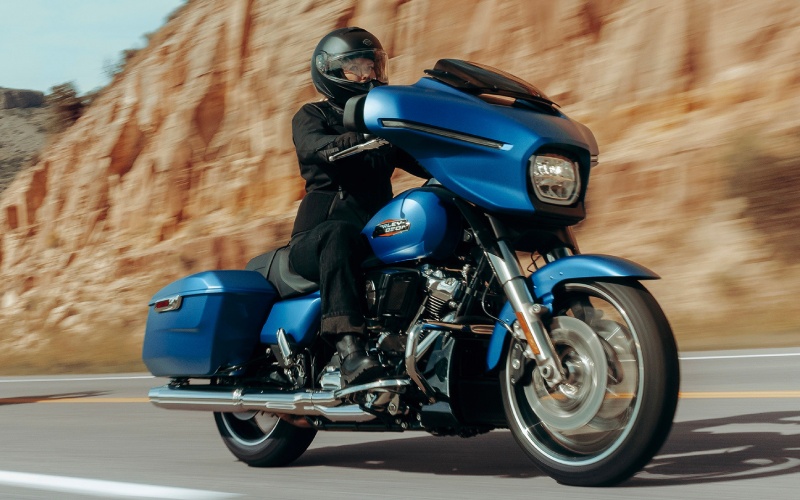
Lancaster Harley-Davidson® - Is the 2026 Harley-Davidson® Street Glide® manageable for low-speed control in Lancaster, PA?
Riders who split time between downtown Lancaster stoplights and winding country lanes want a touring motorcycle that feels composed at a crawl, not just at highway speeds. That is exactly where the 2026 Harley-Davidson® Street Glide® stands out. At Lancaster Harley-Davidson®, we talk daily with riders navigating angled parking off King Street, sloped driveways near Strasburg, and rolling approaches along River Road toward Safe Harbor. Below, we dig into how the Street Glide®’s chassis, power delivery, and Rider Safety Enhancements work together to make low-speed maneuvering and hill starts feel intuitive in and around Lancaster, PA.
Before we get technical, it helps to define the real-world question. Low-speed manageability is more than “can it U-turn in a parking lot.” It is about steady control when you feather the clutch on a steep crown near Marietta, easing down a gravel lane by a farm stand in Bird-in-Hand, or balancing at a long light by Park City Center when traffic stacks up on Route 30. In those moments, predictable torque, supportive ergonomics, and smart braking tech matter as much as long-haul comfort features.
What “manageable at low speed” really means in Lancaster
In our area, you encounter a mix of surfaces, grades, and traffic pacing. That means the Street Glide® needs to start smoothly, hold position confidently on hills, and keep chassis feedback calm when the pavement is patchy or dusty. The 2026 model’s fundamentals are aimed squarely at that use case: a low, confidence-inspiring seat height when laden, balanced weight distribution, and suspension that resists wallow without feeling harsh over expansion joints on Harrisburg Pike.
The factory seat height when laden is 26.4 in., which helps many riders get more of a boot on the ground when dab-steering into a tight downtown spot or backing into a slightly off-camber space near Lititz Springs Park. Combine that with a one-piece seat designed for miles and you get support that keeps your hips and lower back relaxed while you fine-tune foot pressure and clutch feel at a crawl.
Power delivery you can meter at a walking pace
The liquid-cooled Milwaukee-Eight® 117 delivers 130 ft-lbs of torque at 3,250 rpm and 105 horsepower, but what you notice at parking-lot speeds is how cleanly it takes throttle. The broad torque curve lets you lift off the line with minimal revs and fewer clutch corrections, which reduces the chance of lurching when you are starting on a grade by the Columbia-Wrightsville Bridge approach. Paired with ride modes through Skyline™ OS, the Street Glide® can tailor throttle response to match conditions, helping you choose a feel that is smoother in town and more immediate on open stretches of US 222.
Harley-Davidson® has also tuned the 6-speed ratios so first gear feels tractable rather than abrupt. That is helpful when you are inching forward in Old Town traffic or executing a tight U-turn to align with a curb on West King Street. The 2-1-2 exhaust layout contributes to even fueling and a steady idle, giving you a predictable baseline as you feather the clutch.
Chassis stability and braking tech that help at a crawl
The Street Glide® runs a 49 mm front fork with dual bending valve technology and dual outboard emulsion rear shocks with preload adjustability. In practice, that combination reduces pitching when you roll off the throttle at 10 mph to slot into a driveway, while keeping the front tire planted across ripples or uneven tar snakes you find on rural cut-throughs. Adjusting rear preload to your solo or two-up weight keeps the bike level and steering neutral at low speeds.
Rider Safety Enhancements contribute in subtle but important ways when speeds drop. Anti-lock Brake System (ABS) and Electronic Linked Braking (ELB) help the bike stay composed when you apply light pressure on irregular surfaces, and Tire Pressure Monitoring System (TPMS) keeps you informed before soft pressures add a vague feel to parking-lot turns. On variable camber turns or when you are slightly leaned at a stop-and-go crawl, Cornering Enhanced ABS (C-ABS) and Cornering Enhanced Electronic Linked Braking (C-ELB) can adjust brake application with lean factored in, supporting your line instead of fighting it.
Hill starts, gravel, and angled parking — the Lancaster checklist
For hills and ramps, Vehicle Hold Control (VHC) is the feature riders ask about most. When you come to a complete stop, a firm squeeze on the front brake lever or a solid press of the rear brake pedal activates VHC and keeps the brakes engaged after you release the lever or pedal. On a sloped alley off Orange Street or the exit ramp by Route 30, that extra second to roll on and release the clutch smoothly reduces stress and prevents rollback without needing a third hand.
On marginal surfaces like stone-dusted shoulders, Traction Control System (TCS) and its cornering variant, C-TCS, help manage rear-wheel spin during gentle takeoffs. Drag-Torque Slip Control System (DSCS) can also reduce rear-wheel slip during abrupt downshifts on slick patches, which shows up as steadier chassis behavior when you are slowing to creep into an angled spot in front of a café on Queen Street.
Visibility, awareness, and the role of Skyline™ OS
All-LED lighting increases conspicuity in early morning haze over the fields or at dusk on New Holland Pike, and the 12.3 in. full-color TFT driven by Skyline™ OS consolidates key vehicle information, including TPMS and other vitals, in one glance. Turn-by-turn navigation and Apple CarPlay compatibility can help you plan a clean route through the grid of one-way streets downtown without juggling a separate device. Less distraction means more focus on balance, clutch, and brake finesse when traffic is dense.
The Street Glide® also integrates digital gauges within the display, which helps declutter your view. Seeing speed, engine data, and navigation cues in a single focal area reduces the need for head movement when balance is your top priority at under 15 mph.
To summarize how these pieces come together for Lancaster riders, here are the highlights we point out on the showroom floor when the conversation is squarely about low-speed confidence.
- Vehicle Hold Control (VHC): Keeps the brakes applied after a stop to assist with hill starts and ramps.
- Cornering Enhanced ABS (C-ABS): Modulates brake pressure with lean angle in mind to support stability when turning slowly.
- Electronic Linked Braking (ELB): Balances front and rear braking effort to help smooth, controlled stops at low speed.
- Cornering Enhanced Traction Control (C-TCS): Manages wheel spin when pulling away on slick paint, wet leaves, or light gravel.
- Drag-Torque Slip Control System (DSCS): Reduces rear-wheel slip on abrupt downshifts to keep the chassis settled.
- Seat Height, Laden: 26.4 in. for easier footing and balance when dab-steering or backing into angled spots.
- Engine Torque: 130 ft-lbs at 3,250 rpm for smooth, low-rpm launches without extra clutch work.
- Rear Suspension: Dual outboard emulsion shocks with preload adjustability to keep steering neutral at a crawl.
- Tire Pressure Monitoring System (TPMS): Alerts you to pressure changes that can make low-speed steering feel vague.
- Skyline™ OS 12.3 in. Display: Consolidates vehicle info and navigation, reducing distraction during tight maneuvers.
Every item above matters on the roads we ride daily. Whether you are easing out of a gravel turnout along Creek Road or navigating the slow roll across the Columbia Bridge at peak hours, the 2026 Street Glide® combines tactile balance with technology that does not get in your way.
Local ownership notes from our service team
Our service advisors often help new Street Glide® owners dial in preload for their typical load and riding style. If you frequently ride two-up to dinner in Lititz or carry extra gear on a run to Long’s Park, setting preload properly will keep the bike level, which translates to lighter, more predictable steering at parking speeds. We also suggest keeping an eye on TPMS alerts as seasonal temperature swings can nudge pressures enough to change low-speed feel.
On tires, the Dunlop Harley-Davidson Series blackwall setup provides a confident baseline for Lancaster’s mix of surfaces. If you spend a lot of time on gravel pull-offs, our parts team can discuss tread options that maintain the Street Glide®’s touring intent while adding a bit more bite. Finally, a smooth clutch engagement point is your friend at a crawl; regular maintenance keeps lever feel consistent so you can meter power precisely when inching forward on an incline.
We also hear from riders moving up from lighter platforms who worry about the Street Glide®’s in-running-order weight. Balanced geometry, a low center of gravity, and the supportive reach to the bars make that weight feel cooperative as long as you keep inputs calm and look where you want to go. The Next Generation of Batwing fairing is tuned to manage airflow at speed, yet it stays unobtrusive during tight, slow turns so you can focus on line and balance.
Frequently Asked Questions:
Is the 2026 Harley-Davidson® Street Glide® truly easy to manage at low speeds around Lancaster, PA?
Yes — in everyday Lancaster use, the Street Glide® feels composed at a crawl thanks to its 26.4 in. laden seat height, balanced chassis, and assistive tech. Vehicle Hold Control (VHC) prevents rollback on grades, while systems like C-ABS, C-ELB, and C-TCS help you stay smooth on uneven or slick surfaces. With the Milwaukee-Eight® 117’s tractable torque and ride modes via Skyline™ OS, takeoffs are predictable whether you are pulling away on a crowned side street or easing through downtown traffic.
How can I optimize the Street Glide® for hill starts and angled parking in the city?
Set rear preload to your typical load, keep tire pressures within spec using TPMS as your guide, and choose a ride mode that softens initial throttle for tight maneuvers. Practice activating VHC on mild grades so the process becomes second nature when you need it on steeper ramps. These small setup steps pay off instantly on Lancaster’s mix of hills and angled spaces.
Will the electronics feel intrusive at very low speeds?
No. The Rider Safety Enhancements are designed to assist in the background, stepping in primarily when traction is limited or when lean and brake inputs intersect in ways that could unsettle the bike. In normal creeping and balancing scenarios, the Street Glide® feels natural and rider-led, with the tech providing a safety net rather than calling attention to itself.
For riders who want a Grand American Touring motorcycle that is just as confident at 5 mph as it is at 65, the 2026 Harley-Davidson® Street Glide® checks the right boxes. Our Lancaster Harley-Davidson® team is here to help you set it up for your routes — from quick trips into Central Market to long loops out toward the river hills — so low-speed control feels easy from day one.